

Plantain
nêhiyawêwin (Cree): paswépak <br/> Michif-Cree: plaañteñ<br/> Île-à-la-Crosse Michif: ayîkis nîpiy<br/> Latin: <i>Plantago major</i> L.<br/> Snakeweed, White man's foot, Chokeweed
(Banner image) USask [CC BY-SA]
Description
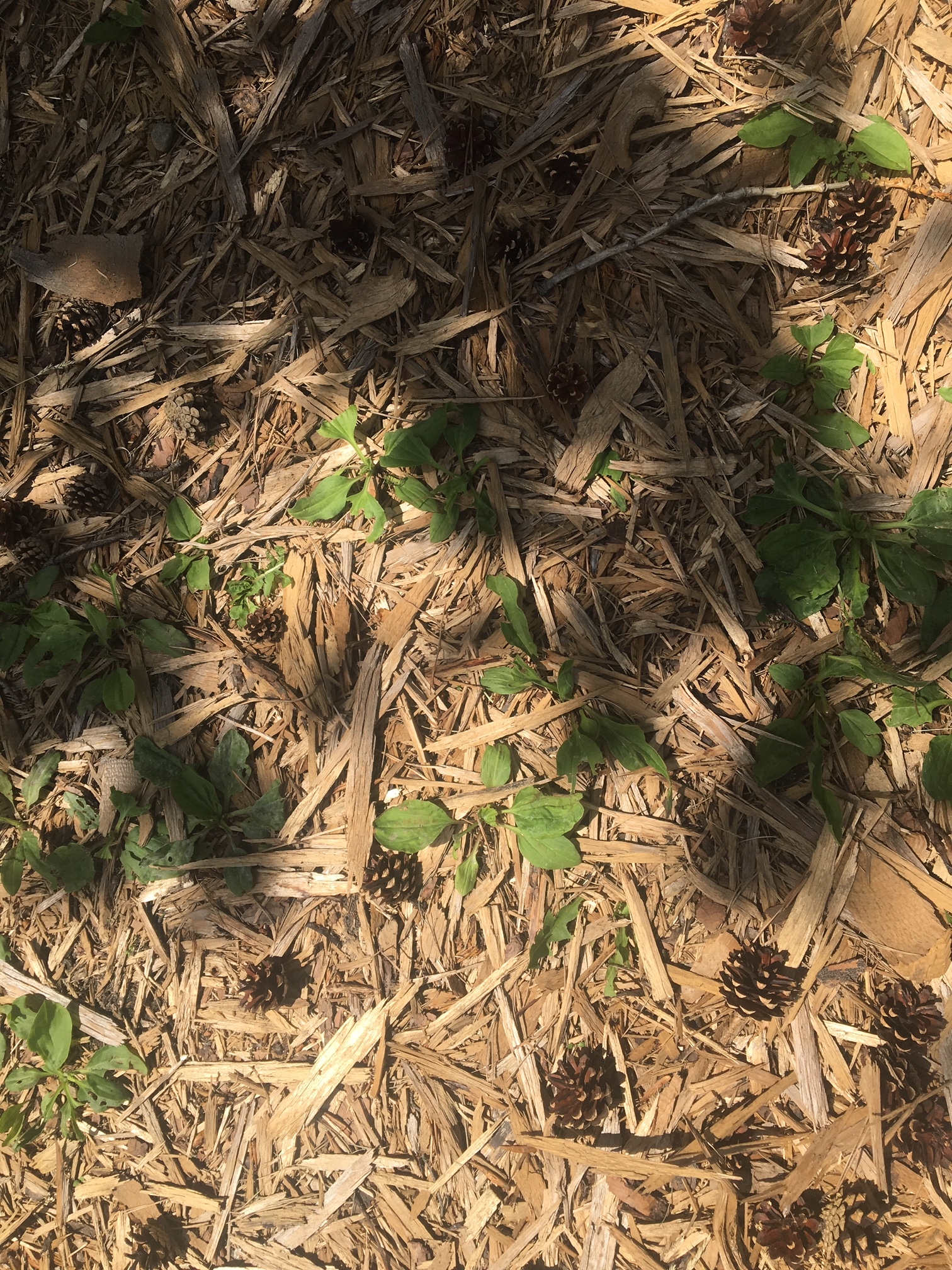
You've probably seen Plantain while weeding your garden. We didn't plant Plantain specifically; it arrived on its own. We also heard about Plantain in one of the stories told to us by Maria.
Even though Plantain originates in Europe, it has been widely adopted as a folk remedy by many cultures and is confirmed to stimulate the healing process (Foster & Duke, p, 102).
It's called White Man's Footstep because this little plant followed the settlers here from Europe. Plantain tends to grow along pathways and railroads. (Kimmerer, p. 213) Plantain is not Indigenous, it's "naturalized". It has become a good neighbour by offering its healing ability without leaving posion, taking up too much space, or using up all the water. (Kimmerer, p. 214)
Food
You can eat the leaves raw in a salad or steamed. It contains Vitamins A, C, K, and potassium. (Gray, p. 136) You can eat the leaves boiled after you remove the long fibers (Cree Elder, published in Marles et al., p. 214). If you eat them earlier in the year, the leaves won't be so tough from the summer heat (Kimmerer, p. 214).
You can use the leaves for your tea if nothing else is available (Métis Elder, published in Marles et al., p. 214).
Medicine

Did you know that Plantain can help you stop smoking? Just eat the leaves or make them into a tea to drink before you smoke. Then when you smoke you may soon get the feeling of having over-smoked and feel like putting it out. (Gray, p. 135)
The crushed leaves treat burns, cuts, poison ivy, stinging nettles, and insect bites. (Belacourt, p. 42) Mosquito bite itching can be relieved with a poultice of plantain. (Gray, p. 134)
If you crush it and wrap it onto cuts, it disinfects and stops bleeding. Combine it with stinging nettle to treat a rash or exema. (CBC News, Medicine Walk at Wanuskewin, 2:05). One reason for its healing effectiveness is that plantain leaves (like comfrey and bluebell) contain allantoin which is good at healing skin and bones. (Gray, p. 135)
Plantain is also called "choke weed" because its boiled roots can be given as a liquid to a person who is choking on a bone and it will help the bone slide down or cough up. (Belacourt, p. 42)
Taken as tea or syrup, plantain helps with the lungs: to help with bonchitis, laryngitis, coughs, and excess mucus in the respiratory system. It also helps with hay fever and runny noses. (Gray, p. 135)
To treat heart trouble, you can drink the leaf infusion (Cree Elder, published in Marles et al., p. 215).
Plantain also treats digestive system issues such as diarrhea, overly acidic stomach, ulcers, urinary-tract bleeding, bladder infections, cystitis, prostate inflammations, urethra infections, gout, and kidney infections (Gray, p. 135). The seeds are good for digestion (Kimmerer, p. 214). The leaf infusion can also treat cramps, stomachache, stomach flu, or constipation (Métis Elder, published in Marles et al., p. 215).
As a laxitive, you can drink the seeds, but you have to drink lots of water because the seeds can absorb more than 10 times their volume in water. (Gray, p. 135)
References
(Banner image) "Plantain in the traditional garden". University of Saskatchewan. [CC BY-SA (https://creativecommons.org/licenses/by-sa/3.0)]
Belacourt, C. (2007). Medicines to Help Us - Traditional Métis Plant Use. Saskatoon, SK: Gabriel Dumont Institute.
CBC News. [CBCSaskatchewan]. (2017, Aug. 4). Medicine walk at Wanuskewin Heritage Park [Video File]. Retrieved from https://www.youtube.com/watch?v=_pDCED70OmI.
Cree Elder, Athabasca River region, AB. Interviewed 1994, published in Marles et al., 2012.
Foster, S. and Duke, J. A. (2014). Peterson Field Guide to Medicinal Plants and Herbs of Eastern and Central North America, Third Edition. New York: Houghton Mifflin Harcourt Publishing Company.
Kimmerer, R. W. (2013). Braiding Sweetgrass: Indigenous Wisdom, Scientific Knowledge, and the Teachings of Plants. Canada: Milkweed Editions.
Marles, R. J., Clavelle, C., Monteleone, L., Tays, N., and Burns, D. (2012). Aboriginal Plant Use in Canada's Northwest Boreal Forest. Edmonton, AB: Natural Resources Canada.
Métis Elder, Elizabeth Métis Settlement, Alberta. Interviewed 1994, published in Marles et al., 2012.