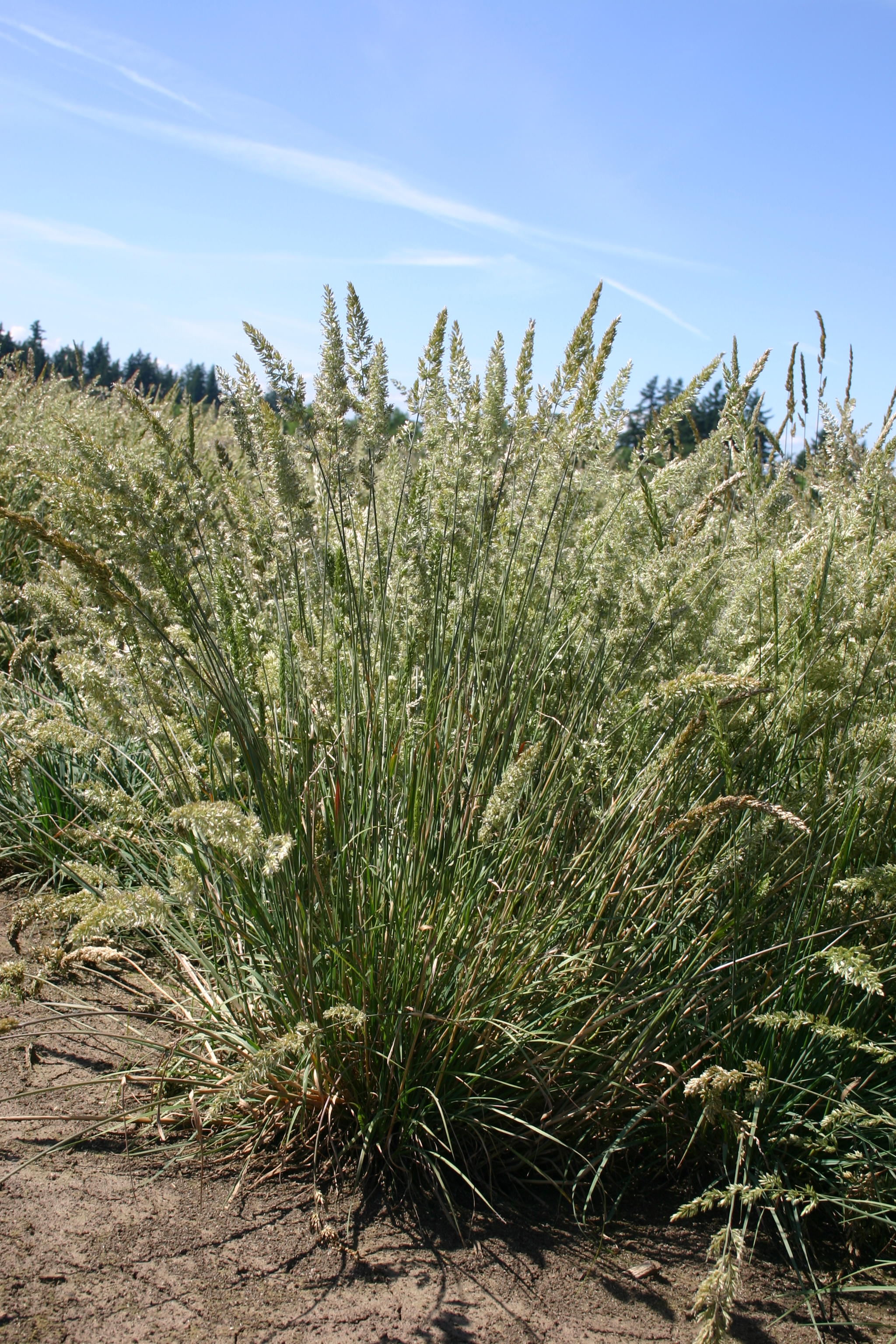
Junegrass

nêhiyawêwin (Cree): paskwâwaskosiya <br/> Latin: <i>Koeleria macrantha</i><br/>

By Jordan Morton

Regions and Distribution

Koeleria macrantha is a species in the Poaceae (Grass) family known by the common name Junegrass. It is native to much of North America, from Alaska to northern Mexico to the eastern United States. 
https://www.applewoodseed.com/product/junegrass-prairie/

Identification and Harvest

https://silverfallsseed.com/product/junegrass-prairie/
This is a short, tuft-forming perennial bunchgrass, reaching heights from 20 to 70 centimeters. The leaves are basal and up to about 20 centimeters long. The flower cluster is nearly cylindrical and may taper somewhat toward the tip. It holds shiny tan spikelets which are sometimes tinted with purple, each about half a centimeter long. Junegrass doesn’t form a spreading sod; it’s a bunch grass, retaining its clumping form throughout life.  It has fibrous roots that reach a depth of 1-3 feet (to about 75 cm). While other native grasses have deeper roots, these are plenty deep to give Junegrass a water-wise edge over typical lawn grasses (which have roots only 6-8 inches deep). The roots also make Junegrass useful for holding soil on slopes. 

Medicine

https://commons.wikimedia.org/wiki/File:Koeleria_macrantha_(6244462456).jpg
The plant has been used in the treatment of cuts. Seed - cooked. It is ground into a powder and eaten like porridge or used as a flour for making bread etc.The leaf blades of the plant have been tied together and used as paint brushes and brooms. Bunches of the leaf blades, about 30cm long, have been tied with string or yucca fibre, and used as a scourer for cleaning pans etc. The straw has been mixed with adobe to give strength and adhesion when building walls.