

Traditional Garden
for awareness of and support for Indigenous land-based teachings
Where is it?
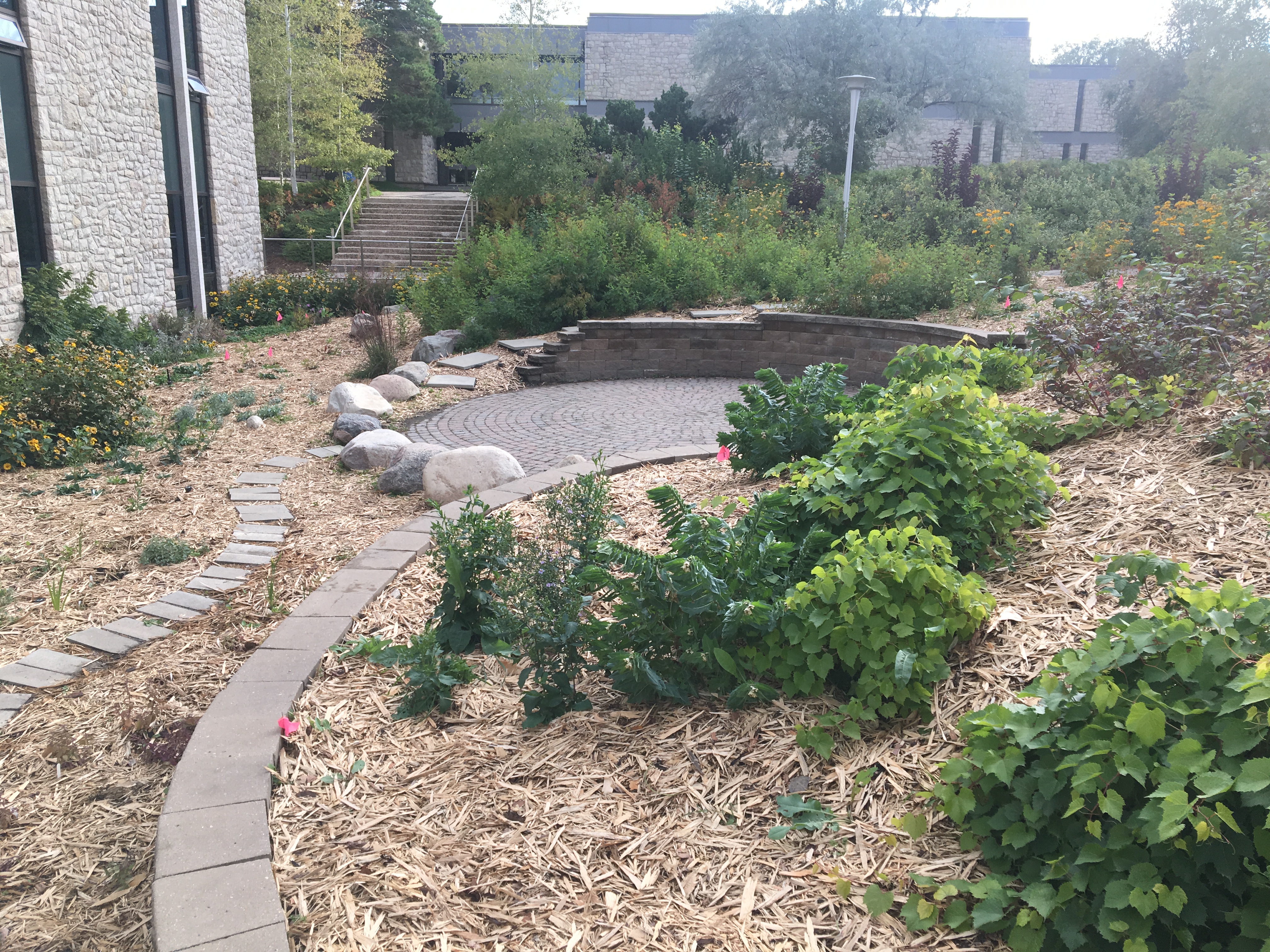
The Traditional Garden is located on the main USask campus near the wiyasiwewin mikiwahp (law lodge) Native Law Centre.
One way to find it is near the large lecture theatres, Arts 143 and 146. Between the theatre entrances, you'll see a stairwell area that includes windowed doors to go outside. Go outside to descend more stairs, and you'll be overlooking the garden. The stone pathway into the garden is a bit to your left.
To access the garden while avoiding stairs, instead begin in the Arts classroom wing and go out the doors toward the parking loop. Then, walk down the path to your right. There's a nice spot that overlooks the garden if you just walk on the grass underneath the cluster of trees. Be careful, it gets a bit steep as you get closer to the garden.

What does the land mean to you?
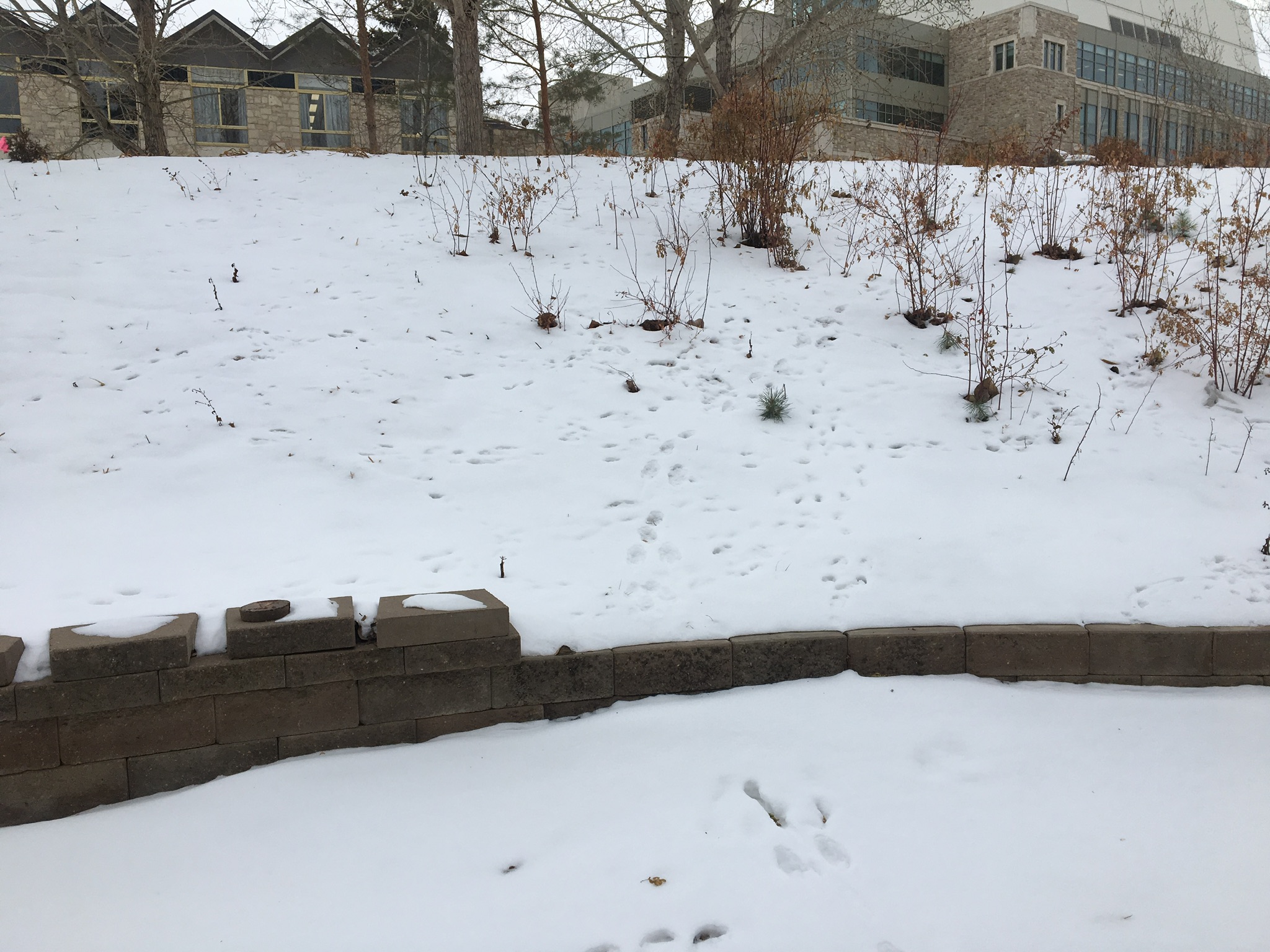
The land is so important not only for our survival, but to teach us to have good relationship with one another, as in our treaty relationships. You would hear about treaty in USask's land acknowledgement.
Read more in the learning module of Indigenous Voices about Land Agreements.
The traditional medicines were planted at the direction of our Cultural Advisor, Maria Campbell. These include Bergamot, Black-Eyed Susan, Bluebell, Cedar, Fireweed, Fringed Aster, Goldenrod, Iris, Smooth Aster, Tobacco, Sage, Wild Mint, Wild Rose, and Yarrow. Some didn't need to be planted because they moved in of their own accord, which this author believes includes Plantain and Dock. Other plants were chosen for the Wakeling garden which is named in memory of former USask graduate and faculty member Tom Wakeling who also served as chief justice in Saskatchewan, and who was also avid gardener ("Facilities named", 2008). In the garden you might also find Echinecea (Purple Coneflower), Red Willow, Sweetgrass, Rosehip berry (Wild Rose).
All Traditional Knowledge belongs to the Indigenous communities that it comes from.
Medicine
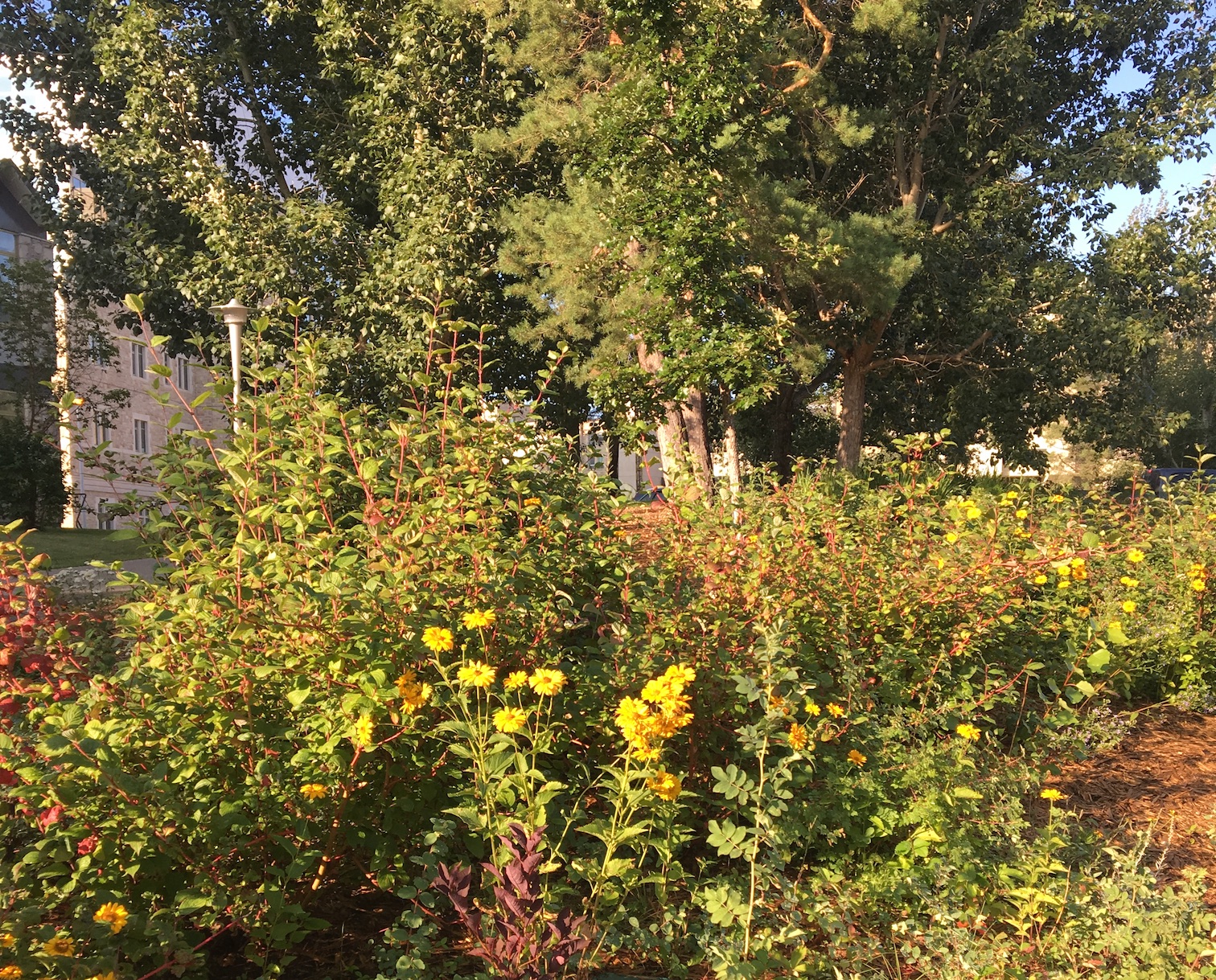
Plants such as those in this garden have been used by Indigenous people for thousands of years and continues today. Plants treat just about anything you can name, including blood and circulation, respiration, coughs, skin, ears and eyes, fevers, colds, headaches, digestion, injuries, bones, nutrition, pregnancy and childbirth, and more. (Uprety et al., 2012)
References
Facilities named (2008, October 31), On Campus News, University of Saskatchewan. Retrieved from https://ocnarchives.usask.ca/08-oct-31/6.php
Uprety, Y., Asselin, H., Dhakal, A., & Julien, N. (2012). Traditional use of medicinal plants in the boreal forest of Canada: review and perspectives. Journal of ethnobiology and ethnomedicine, 8, 7. https://doi.org/10.1186/1746-4269-8-7 (https://lfs-indigenous.sites.olt.ubc.ca/files/2014/07/RayObomsawin.traditional.medicine-1.pdf)